Company Blog

The Benefits of a Top-Mounted Damper

According to the Chimney Safety Institute of America (CSIA), a damper is an important component of every chimney. Essential for an energy-efficient home, the damper keeps the heat in and the cold air out of your house, which saves you money on heating bills. Your damper is also used to control the flow of smoke, gases, and the other byproducts of combustion up the chimney to exit your home. Available in two different types, you can choose between the throat damper and the top-mounted damper. Also known as the traditional fireplace damper, a throat damper is installed right above the firebox and is found in many old masonry chimneys. However, this type of damper has many flaws and issues. At All Seasons Chimney, we strongly recommend the top-mounted damper over the throat damper. We would like to tell you more about the benefits of these dampers.
top-mounted-damper-benefits-image-poughkeepsie-ny-all-seasons-chimney

This clip is courtesy of Richie Baxley at Environmental Chimney Service in Asheville NC.

A top-mounted damper serves two functions, allowing you to “kill two birds with one stone.”

One of the main benefits of a top-mounted damper is that it also serves as a chimney cap when the damper is closed, and, to be honest, this type of damper actually gives you better protection than an ordinary chimney cap. Equipped with a silicone rubber gasket that seals in heat and air conditioning as a damper, a top-mounted damper also gives you an air-tight seal to keep out water, debris, birds, squirrels, and raccoons — just as a chimney cap would. When our customers need a new chimney cap, All Seasons Chimney will recommend that they install a top-mounted damper instead of a chimney cap. Some models of top-mounted dampers come with caps, so even when the damper is open, your chimney is still protected from debris and animals.

A top-mounted damper will save you both energy and money.

Throat dampers just do not completely seal as well as top-mounted dampers. You will not have to worry about cold air, ice, and snow entering your flue to create a cold core in your chimney. A cold core tries to cool your home at the same time that your heating system is trying to warm it up, which wastes both fuel and money. As a top-mounted damper sits atop your chimney, cold air never even has a chance to get anywhere inside because your entire flue is sealed air-tight with the silicone rubber gasket. Believe us when we say you will save money on both cooling and heating bills when you install a top-mounted damper.

A top-mounted damper is easy to operate.

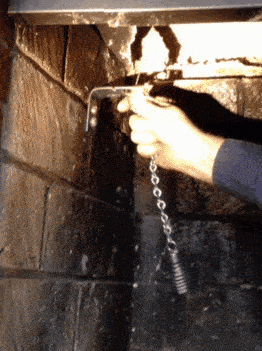
With some throat dampers, you must practically stick your head up the fireplace to open and close them. When you have a top-mounted damper, opening and closing the damper is simple. A stainless steel cable from the damper drops down the chimney and connects to an easily-accessible handle which is mounted inside the firebox. Different models will have different opening and closing methods, but All Seasons Chimney guarantees you will find all easy to use.

Want to know more about the benefits of top-mounted dampers? Contact All Seasons Chimney to find out even more advantages to this type of damper.
Fireplace Troubleshooting

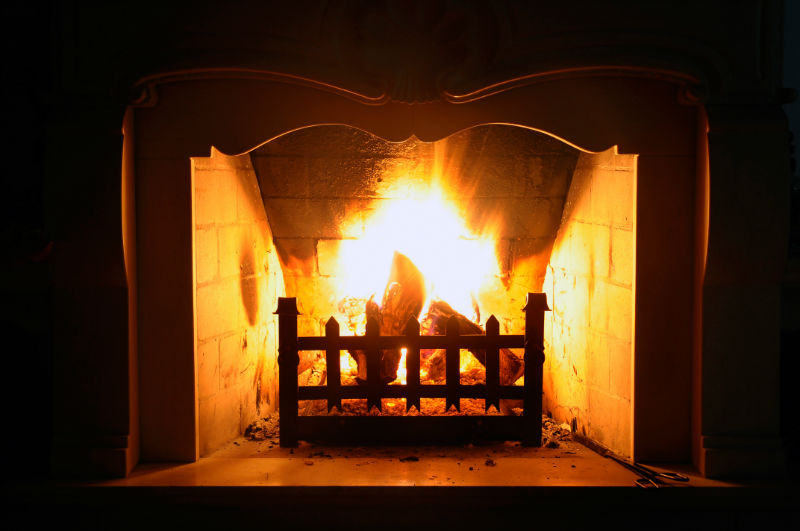
A fireplace adds a certain ambiance that no other addition to the home does. The crackling warmth and the dancing flames – this mystical allure draws in people of all types and ages. Everyone loves a good fireplace, but when it starts causing frustrating problems, some homeowners would sooner forget it even exists! Before walling over your fireplace though, consider some basic troubleshooting ideas that may be behind the dysfunction.

fireplace-troubleshooting-image-poughkeepsie-ny-all-seasons-chimney

Often, the most troubling problems have the simplest solutions. For example, the fire may extinguish quickly or send smoke into the house just because the damper has not opened correctly. Prior to lighting the fire, glance up the chimney with the damper open to make sure it has actually opened. When open, you should have a view of the entire flue. If all you see is darkness or mostly darkness, the damper has not opened properly. When jiggling the handle or turning it the opposite direction does not open the damper, call out a chimney expert to check the condition of it before lighting any more fires.

Another problem that may lead to a nonexistent, weak, or smoky fire is burning wet wood. This only applies to wood burning fireplaces, but it can be a serious problem. Firewood needs to season, or sit uncovered in a dry area, for one to two years prior to burning. Unseasoned wood usually has high water content, so most of the fire’s energy goes toward boiling the water away instead of making flames and heat. For this reason, wet wood often produces weak and smoky fires, if it even lights at all.

When these two issues have been solved or eliminated and the fireplace is still causing problems, there may be a draft problem in the house. Imagine hot air from the fire constantly moving up and out the chimney. This air comes from inside the house and it must be replaced in some way in order for the fire to continue burning properly. Sometimes the air cannot be replaced, which can be due to an overly airtight house – a common problem in newer construction. Fixing this might involve opening a window while burning or having an outside air vent installed.

A problematic draft can result from a variety of issues besides having an airtight home. For instance, an obstruction in the chimney could be blocking proper air flow. Possible obstructions include built up soot or creosote that needs to be cleaned or even an animal nesting inside the flue. The simple fix for this is to have the chimney swept at least once per year as required by fire codes. Another issue involves the structure of the chimney itself. The chimney may be too short or it may be too wide for a newer fireplace insert. Both of these situations can lead to weak and smoky fires. Have an annual chimney inspection along with a sweep to determine if this is the problem.

For more information on possible fireplace issues and to schedule a sweep and inspection in the Hudson Valley area, contact All Seasons Chimney.