Waterproofing Your Chimney: Trust Our Experts Near Poughkeepsie
Water has no business being inside your masonry chimney. Unfortunately, much of your chimney may be susceptible to leaks and water damage, which can end up being incredibly expensive to repair. Whether or not you use your chimney, we recommend having it professionally waterproofed to protect your home from water damage. We often see leaky chimneys manifest themselves in areas other than just the chimney. For instance, we find that many of our customers with leaking chimneys complain of stains on the ceilings and walls adjacent to their chimneys.
Why Is Chimney Waterproofing So Important?
In our work at All Seasons Chimney, we view the chimney like a fortress. Not only do we want to make it strong and able to safely vent toxic gases, but we also want to prevent water from entering it, as leaks can impede the integrity of your chimney and make it unsafe for use.
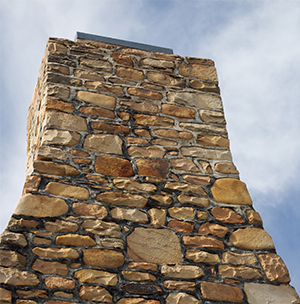
One of the best ways we do this is by applying a waterproofing agent to your chimney’s brick and mortar. Believe it or not, masonry – mortar especially -can be quite porous, and will actually drink up rainwater, drawing it into your chimney. However, by applying a waterproofing product to your masonry chimney, we are able to reduce water penetration by as much as 99.9%. And because the product we use is vapor permeable, water vapors are still able to pass through your chimney bricks when your chimney is in use.
How Does Chimney Waterproofing Prevent Damage?
- Your chimney’s masonry will be protected from water penetration for a decade following the professional application.
- Your chimney will be protected from efflorescence, stains, mildew, and fungus.
- Your chimney will benefit from the added freeze and thaw protection.
Have questions about chimney waterproofing? Just ask!
How Does the Freeze–Thaw Cycle Damage Chimneys?
The freeze–thaw cycle is one of the single most destructive forces acting on masonry chimneys, and it’s especially relevant here in the Lower and Mid-Hudson Valley, where temperatures swing above and below freezing dozens of times throughout the colder months. Many homeowners assume that a deep, sustained cold snap is what damages a chimney, but the opposite is true: it’s the repeated back-and-forth cycling between freezing and thawing that causes the most harm. A chimney in a consistently cold climate can actually fare better than one that thaws and refreezes over and over, as ours do throughout late fall, winter, and early spring.
Here’s how the freeze/thaw process works:
- Brick, mortar, and concrete are naturally porous materials. Even though they feel solid and hard, they’re full of microscopic pores, capillaries, and hairline cracks that readily absorb water.
- When it rains or snows, water is drawn into these tiny openings through capillary action – the same process that pulls water up a paper towel.
- When temperatures drop below 32°F, that trapped water freezes and expands by roughly 9% in volume. This may not sound like much, but within the confined space of a crack or pore, that expansion generates enormous internal pressure, often exceeding 2,000 pounds per square inch.
- That pressure is more than enough to fracture brick, crack concrete, and push mortar apart from the inside out.
The truly damaging part isn’t a single freeze – it’s the relentless repetition:
- Water enters the tiny cracks and pores in the masonry, crown, and mortar joints.
- Temperatures drop and the water freezes, expanding and applying tremendous internal pressure that widens the existing cracks and creates new ones.
- Temperatures rise and the ice melts, and now water penetrates even deeper into the newly enlarged cracks and voids.
- The cycle repeats, and each time, the cracks grow slightly larger, hold slightly more water, and cause slightly more damage.
Because each freeze creates a bigger opening for the next round of water, the damage doesn’t progress in a straight line – it accelerates over time. What begins as an invisible hairline crack can become a serious structural fissure over just a few winters.
What Does Freeze–Thaw Damage Looks Like?
As this process unfolds, it produces several telltale forms of deterioration:
- Spalling: Perhaps the most recognizable sign. As trapped moisture freezes behind the face of a brick, it pushes the outer surface off—causing the brick faces to flake, pop, crumble, or pit. You may notice small piles of brick fragments or sandy grit at the base of the chimney.
- Crown cracks: The chimney crown (the flat, sloped surface at the very top) takes the brunt of direct rain and snow. Freeze–thaw action widens hairline crown cracks into gaps that funnel water straight into the chimney structure below.
- Mortar joint deterioration: The mortar between bricks is softer and more absorbent than the brick itself, so it often fails first. As mortar cracks and crumbles, gaps open up, allowing even more water in and weakening the bond that holds the entire chimney together.
- Bowing or leaning: In advanced cases, widespread mortar failure and saturated masonry can cause sections of the chimney to shift, bow, or lean – a serious structural concern.
How Do I Prevent Chimney Leaks?
Though we’re focused on waterproofing on this page, there are lots of other important ways to prevent water from getting into your chimney. After all, if you have a masonry chimney without a crown, it won’t do you much good to waterproof your masonry, since having a chimney without a crown is like having a house without a roof.
Depending on the condition of your chimney, the type of chimney you have (masonry or prefabricated), and the source of your leak, our technicians will likely recommend a combination of one or more of the following to prevent chimney leaks:
- Installation of a chimney crown or a top-sealing damper
- Installation of a chimney cap
- Installation of a chase cover
- Masonry repair or tuckpointing
Schedule Your Next Chimney Service Today
Call us at 845-506-8197 or click here to schedule an appointment with an All Seasons pro who will promptly address your chimney needs.
Repairing or replacing the flashing around your chimney may fix your water leak, so ask us for more details today.