 Before you light your first fire of the year this fall, you need to have your chimney professionally swept and inspected. Fire safety organizations, including the Chimney Safety Institute of America (CSIA) and the National Fire Protection Association (NFPA), recommend these chimney maintenance services be done in the summer to be sure your fireplace and chimney pose no hazards. Summertime can be a very busy season with vacations and summer camps, and All Seasons Chimney understands that making your chimney sweep appointment can slip your mind. When you forget to schedule your chimney sweeping before fall, you may have to wait for a few weeks before we will be able to get to your chimney. Our CSIA-certified chimney sweeps have full calendars from September to December, so it can be hard making the appointment on the date that works best for you. To help you be sure your chimney has been cleaned and inspected every summer, we offer the option of forward scheduling your sweeping appointment. This option allows you to guarantee that your fireplace will be ready to use as soon as you wish. We would like to tell you why an annual chimney sweeping and inspection is so important for your chimney to work safely and efficiently.
Removing creosote
When you have a wood-burning fireplace or stove, it is inevitable to have creosote deposits building up on the walls of your chimney. A natural compound, creosote forms during condensation that occurs during the combustion process of burning wood. Not only is creosote stinky and dirty, it is so highly flammable that the CSIA has named it as a leading cause of chimney fires. This is why an annual chimney sweeping is so essential. If the creosote is not removed each year, it can build up in large accumulations that can easily ignite if the internal temperature of your chimney gets hot enough. All Seasons Chimney will reduce your risk of experiencing a dangerous chimney fire.
Finding damage that could cause your chimney to be unsafe
When the CSIA-certified chimney sweeps from All Seasons Chimney inspect your chimney every year, they are looking for problems that could make your chimney a safety hazard. Your chimney will be checked to be sure no debris is blocking the flue as this can cause carbon monoxide and other toxic gases to be forced back into your home. The exterior of your chimney will be examined for damaged and missing bricks and mortar joints, which allow water to easily enter your chimney to cause more damage. Cracked and loose bricks and mortar joints can also jeopardize the soundness of the structure of your chimney. If we find any damage or other issues, they will be included in the written evaluation of the condition of your chimney with photos of the problems. We will also provide you with a written estimate of the repairs that are necessary to make your chimney work safely.
Forward scheduling your chimney sweeping has many advantages. Contact us at All Seasons Chimney to learn more about this convenient option to make sure your chimney has been properly swept and inspected every year.
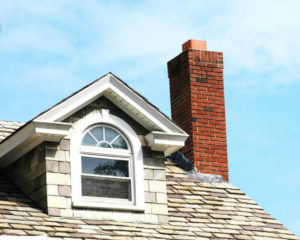 In order to work safely and efficiently, your chimney system needs several important components, including a liner. Until the mid-20th century, chimney liners were not mandated under building codes, and if you own an older home, there is a chance your chimney is unlined. All Seasons Chimney can bring your chimney up to modern standards by installing a new chimney liner in the flue. An unlined chimney can be dangerous. In the 1940’s and the 1980’s, the National Bureau of Standards (NBS) tested masonry chimneys for performance and safety reasons. They found that unlined chimneys were extremely unsafe. One of the researchers even compared building a chimney without a liner to committing a crime. Why is a